Close
May 19 and a new article is below from Martin Carter
Steve Radcliffe

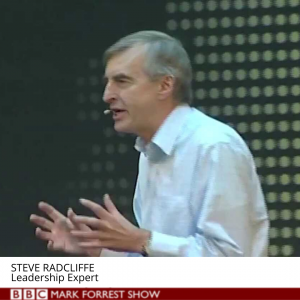
Hi, I'm Steve Radcliffe and we want to help you and your colleagues become more confident and effective leaders. For 20 years now, the team at Steve Radcliffe Associates have been helping leaders in a whole range of organisations to develop their leadership and deliver better results at work and in life.

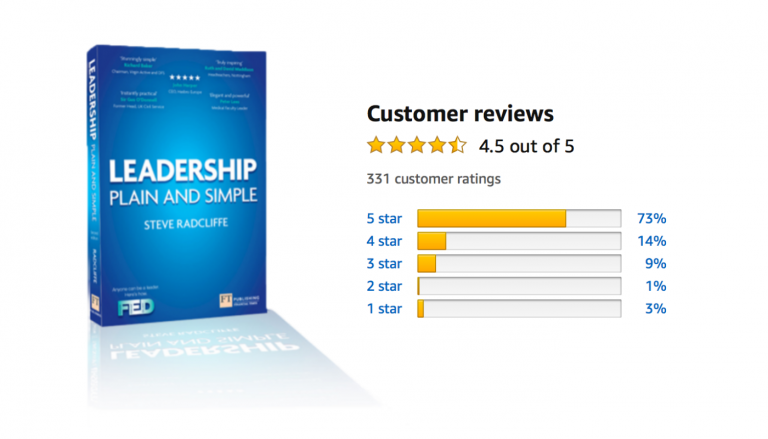
By subscribing to this website you can find out exactly how we and our clients have achieved this. Each week we will post new ideas and insights from our experience that will support you on your leadership journey. The approach we use is called Future-Engage-Deliver (FED). You can start your learning about FED leadership right now by reading a sample of my book. We are delighted that the book is the number one leadership book on Amazon UK – of the more than 165,000 available! – and it's now available on this site in audio form.

It is our goal to stimulate a national discussion about leadership, so please do join in. Comment on what you read and share this website with friends and colleagues.

We look forward to hearing from you

Best wishes, Steve....

In this post regular FED post contributor Martin Carter reflects back on the death of his mother two years ago and on a big learning about the kinds of stories he makes up when triggered and the questions he asks that help him get back into being his best.

Martin Carter

Martin Carter

The call arrived at midnight. We immediately lifted the kids from their holiday beds in Cornwall, threw a few things in the car and set off driving through the night. My mum had been fighting cancer for some time but this sudden deterioration was unexpected. She wasn’t expected to last the night.

We arrived in Solihull at 4am and I immediately jumped into our other car, abandoning Claire and the kids on our driveway, and continued the dash to the hospital in Derby. The roads were clear and I got there in no time at all and joined my dad and sister at mum’s bedside. Four hours later Mum was sitting up eating breakfast with the doctors declaring a miracle. Having not slept, mum insisted I go home and get some sleep.

Within 2 hours I got the second call. The apparent quick recovery was followed by an equally quick relapse. I jumped back into the car and repeated the journey. Only this time the roads were packed. I felt my frustration rising, thinking I wouldn’t get there in time. I found myself adopting all the driving techniques which immediately trigger me when I am on the receiving end of them : passing on the inside, pulling into gaps that were perhaps a bit too tight and driving too close to the car in front, willing it to pull over. The journey took twice as long as before, but thankfully I still made it. Mum died peacefully some time later.

A week later, I found myself ‘triggered’ when a car nipped up my inside and pulled in front of me, causing me to brake. As I started to run my usual pattern of cursing, gesticulating and role-playing what I would say – and perhaps even do – to my offender if I got the chance I heard a quiet voice in my head say ‘perhaps his mum’s dying?’. Immediately the pattern was broken. I realised I had a choice how I responded to the trigger – get angry about something I could do nothing about or let go of it. So I let it go.

Now I’m not naïve, I know that their mum probably isn’t dying. But this isn’t about giving them a break, it’s about giving me a break from emotions I don’t need. Simply acknowledging that their mum could be dying, liberated me from the need to dispense justice, be indignant and to get angry.

I then realised that I was running similar story-telling patterns in lots of other areas in my life and so I set about trying to practice telling myself different stories. Two years on, and I am still finding new ones every day. To help me do this, I have shamelessly stolen a question that Anthony Landale frequently used in our FED sessions – “What are you making this mean?”. I now try and ask it whenever I feel those familiar feelings rising and am frequently amazed at how often it saves me from a whole pile of stress inducing emotions that I just don’t need.

Leadership nudge: What are you unconsciously allowing yourself to make things mean? What could you consciously choose to make them mean and what might that do for your mood, your performance and ultimately the quality of your day?

By Martin Carter

Learn more about Martin Carter, the author of this article.

Apologies to those of you who received a mystery post a week or so ago. A few of you have asked us about it as there was no post to be read – it was a blank to test that all the links were working and was not meant to go out!

This week our post is from Lucy Kidd on the importance of a Playing to Win mindset to success.

Lucy Kidd

Lucy Kidd

Boris Becker is a six-time Grand Slam champion. His secret to success? He played to win.
Becker was recently asked whether Andy Murray has got what it takes to win his own Grand Slam title having now been runner up on three separate occasions.

“It’s not a question of technique or his actual game. In the past, I felt he was more focused on trying not to lose than going out to win. He was too negative. His attitude has to be much more positive. Once you’re in a Grand Slam final, you’re playing to win. He’s very, very close and that’s the only missing ingredient.”

John McEnroe is another tennis legend who agrees that this is essential for Murray now, stating that the demands of the modern game are so great that players need to be fully focused mentally and not waste energy wrestling with the demons inside.

When we truly play to win we bring our full focus and energy to what we are up to. We bring a positivity and belief that conquers any thoughts and feelings of self-doubt or potential failure.

It’s something that champions train themselves to do. They play to win. Do you?

Leadership Nudge – How could you choose to play to win more in your life and work? What inner demons could you lay to rest to help you in this?

By Lucy Kidd

Learn more about Lucy Kidd, the author of this article

Little things mean a lot

by John Belmot on 28 November, 2011

We are delighted this week to have a post from John Belmont a mathematics teacher and champion of FED. Here he explores how little things can get in the way of big conversations and of engaging with each other.

John Belmont

John Belmont

I am part of a 10-person team who have their own small staff office which contains a sink. We have coffee and tea making facilities and usually meet together each day during a break. This is a key time for us and big conversations go on there. Given that we all teach separately it is the key time for engagement. However apparently small issues can get in the way of this.

Mugs are a problem.

There are often not enough mugs for each person. Maybe someone has taken a mug away on the previous day and not returned it. Someone has to go without. On other occasions there is a pile of dirty mugs in the sink where a person has returned a mug and left it for someone else to sort out. There are also occasions when the mug that you have been using for days, a mug that you have diligently brought back and washed each day, has been snatched by one of the above mentioned people.

What can you do when you are let down by the mug situation? What can you do about it other than politely ask that all mugs are returned and washed each day? Is it right that the focus has now shifted away from the daily relaxing social break into a fight against the mug-abusers? More importantly a key opportunity for meaningful engagement is lost.

Leadership Nudge

There are numerous potential solutions so find one and move on. Prioritise. Keep sight of the really important issues. Don’t let little irritations spoil big relationships and stop you tackling big issues.

What is happening with your mugs?

John Belmont

Teacher Egglescliffe School, Stockton-on-Tees

Learn more about the author of this article, John Belmot

{ 1 comment }

In this post Alan Humphries highlights the importance of engaging in and enjoying an activity which in the past he grudgingly complied with.

Alan Humphries

Alan Humphries

In my boyhood, weekends were characterised by two things. Firstly, playing sport at school on Saturday mornings and second by my father climbing into his blue boiler suit and then working constantly in the garden or garage on his latest venture/project. Of course I was expected to help which I did so somewhat reluctantly.

Later in life I adopted similar habits and frequently worked in the garden on lawns, hedges, rose beds etc. with similar grudging compliance.

One Saturday morning, as I was trudging out of the door in my jeans and wellies, my wife called to me:

“Where are you going?”

“To work in the garden” I wearily replied.

“Why don’t you just go and play in the garden” she said.

To my astonishment these words made a huge difference, changed my mindset and massively
lightened the morning and my time in the garden since.

Leadership nudge: How much fun are you bringing to what you are up to? When could you bring a sense of play to what you are doing? What is the impact this would have on others around you?

By Alan Humphries

Learn more about the author of this article, Alan Humphries, FED consultant and coach

Anthony Landale

Anthony Landale

Do you sometimes notice colleagues and friends who appear to have lost their zest for work and life? They are working hard but not getting any satisfaction from their endeavours. What’s going on?

There’s a writer called David Whyte who considers this issue in a great book called The Heart Aroused. He tells the story of how he arrived home one day and complained to a friend about feeling completely shattered. What can I do about that, he asked? His friend, wise in such matters, said simply “the antidote to exhaustion is wholeheartedness”.

This story resonates because it suggests that we get burned out when we lose sight of what really matters to us. It’s easy to compromise when the pressure is on or forget our purpose when we are constantly reacting to change. As to what we do about that, it’s easy; at least in principle. Make sure you consistently find a way, especially when busy, to step back, see the big picture and ask yourself what you care about. Better still have a good colleague who will look out for you and help you get back to your best when they see you’ve got a bit lost.

By Anthony Landale

Learn more about Anthony Landale, the author of this article.

Steve Holiday

Steve Holiday

There are two questions that I often ask in my coaching work of others: What do you really care about? and What are you leading for at home, and at work? They are of course both questions that invite Future focus and are particularly relevant at times of change and transition. I have been asking myself these questions as I near the end of two years studying and am thinking about my future. The questions have me feel both excited and somewhat scared.

From my enquiry I know that what I care about is relationships. I truly believe and wonder at all the possibilities that come from great relationships. It is where I want to bring my focus and energy, in the future and right now. I am curious about what I will learn about myself, about others, and where I will get support and challenge. I am wondering more than ever about building bigger relationships with people, learning from them and being up to something with and alongside them as they face into challenges and change.

Leadership Nudge: Are you being courageous and curious enough about what you care about most? Are you being bold and daring about what you want to lead for and create in your work? How are you supporting others to be bold, daring, courageous and curious? Who is in your support network to help make your future a reality?

By Steve Holliday, Organisational Change Leader & Leadership Coach, Siemens Energy, UK & NWE

Learn more about Steve Holliday, the author of this article.

In Leadership Plain and Simple, Steve refers to Lao Tzu who wrote

    “Consciousness or awareness is the source of your ability.”

Martin Carter has found a really creative way of staying aware each day.


When my eldest son, Nathan, turned one, I scoured the local toy shops until I had acquired 884 marbles, this being the number of weeks – and in particular weekends – until he turned 18.  I put them in a jar, marked the top of the stack on the side and put it in our kitchen.  Every Saturday I took one out, put it in my pocket and carried it with me for the week.

The idea was two-fold.  Firstly, the growing space between the original ‘high watermark’ and the top of the stack is a daily reminder of how time slips away. Secondly, and more importantly, knowing the marble I was carrying represented a small portion of a limited period of time – Nathan’s 18th – it helped me focus on what’s important.

Carrying it round, I was constantly challenged to make the most of every minute.  At home, it not only helped me be more present for Nathan but also challenged my mood – I began to see how often events that had nothing to do with him affected how I ‘turned up’ for him.  And by carrying it at work, it reminded me of my wider responsibilities – the marble regularly saved me from doing ‘just one more email’ or making ‘just one more call’ before I left the office, knowing that either could, in fact, wait.

Interestingly, though, it also made me more effective and efficient at work, because, of course, the marble didn’t just represent my time with Nathan, but it represented my time, my life.  I became more aware of how I spent that time, and worked hard at not allowing anyone or anything to rob me of it.  I didn’t want to wake up one day and find that I had literally lost my marbles.

So why is this story written in the past tense?  Well, after 4 years of marble carrying, I found that the thinking pattern it drove became hardwired in me, and so I don’t need to carry the marble anymore – which is a relief because as we now have 3 children and I’m not sure I could afford that many marbles!

p.s. Nathan turned 7 yesterday – the 30th October.  That’s 312, or 1/3rd, of the marbles gone already!

Leadership nudge: Are you losing your marbles?!  Are you constantly aware of the way you decide to use your time, and are you consciously practising squeezing the most out of every moment?

By Martin Carter, Head of Engineering Academy, E.ON UK

Learn more about Martin Carter, the author of this article.

More about Jim

by Anthony Landale on 24 October, 2011

Anthony Landale

Anthony Landale

After my post at the end of last month several people left me messages about Jim. They recognized him. And one real life Jim even wondered if it was him. It wasn’t.

What I take from this is that we meet thousands of managers and leaders who, despite their best intentions and despite following well designed processes are failing to get the best from their people. But as I was saying to a leader this week “I have yet to find anyone who is inspired by a structure or a process”.

It’s in their conversations of course where leaders can make the real difference. And by conversation I mean not only straight speaking, but also great questioning, generous listening, powerful co-inventing and, perhaps most important of all, believing that for the individual or team almost anything is possible if they really want it.

As we often say in FED, leadership is about raising the sense of hope, purpose and ambition. Start having those sort of conversations and I promise that you will find that missing spark.

By Anthony Landale

Learn more about Anthony Landale, the author of this article.

Call to Arms

by Lucy Kidd on 17 October, 2011

Lucy Kidd

Lucy Kidd

Imagine a world where schools are full of leaders who are up to something, from the Head Teacher right through to the children themselves. Where children are inspired to be the best that they can be every day with teachers who passionately engage them in learning.

Last year, Head Teacher David Maddison shared how he uses Future-Engage-Deliver to make a bigger difference in his school.

It sparked our passion to help the nation’s schools become the best that they can be. Now we want to spread the word that FED is not just for the corporate world. We believe it can play a central role in transforming education and the way schools are led.

So we’re offering a free copy of Steve’s book ‘Making a Bigger Difference’ to Head Teachers who want to bring outstanding leadership to their schools.

If you’re involved with a school (as a parent, teacher or governor) we’d love your support in making a bigger difference here.

Why not share your experience of FED and encourage your local Head Teacher to discover how it could help them in what they are up to?

If you are a Head Teacher, a teacher or involved with a school then please click this link to order your FREE copy of ‘How to Make a Bigger Difference’ and enter the Coupon Code ‘HeadTeacherOffer‘ on the next page and submit your order.

By Lucy Kidd

Learn more about Lucy Kidd, the author of this article

{ 1 comment }

Martin Carter

Martin Carter

My post a few weeks ago encouraged us to tell more stories. This time round I want to encourage you to do the opposite. Tell fewer stories. But don’t worry I haven’t had a change of heart.

I’m not talking about inspirational leadership stories that help engage others in what you are up to. I’m talking about the corrosive internal stories we tell ourselves about our limitations, shortcomings and weaknesses.

I surprised myself a few years ago when, in a meeting with two more senior colleagues whom I greatly respected and admired, I suddenly found myself admitting that I couldn’t quite believe that I kept getting away with it – by which I meant securing bigger roles which I believed needed a far more diligent, talented and capable professional than me to do them. I finished by saying “I just try and get to the end of each day without being found out”. My honesty shocked, but not as much as their reply. They both looked at me and said “What, you too? I thought that was just me!”. Superficially, the exchange was light hearted but in that moment we all recognised we were revealing a deeply held, darkly feared truth about ourselves.

I didn’t have the language of FED at the time, but I see now that the stories we were telling ourselves had us consistently playing to avoid losing – to not get ‘found out’. I’ve worked hard since at not listening to that internal story and instead concentrated on playing to win and trusting that, regardless of what the internal voice might say, that turning up at my best will be good enough…and if it’s not? Well if it didn’t work out when I turned up at my best, it definitely wouldn’t have worked out if I didn’t!

Leadership nudge: what stories are you telling yourself that have you play small, avoid certain people or tasks or shy away from certain situations? What if you tell yourself a different story – that your best is good enough – and all you need to do is bring it?

By Martin Carter, Head of Engineering Academy, E.ON UK
E : martin.carter@eon-uk.com