Close
February 7 and a new article is below from Anthony Landale
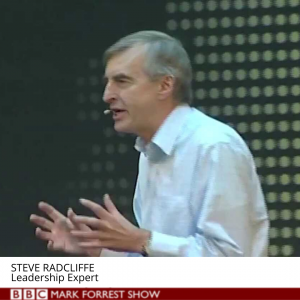
Steve Radcliffe

Hi, I'm Steve Radcliffe and we want to help you and your colleagues become more confident and effective leaders. For 20 years now, the team at Steve Radcliffe Associates have been helping leaders in a whole range of organisations to develop their leadership and deliver better results at work and in life.

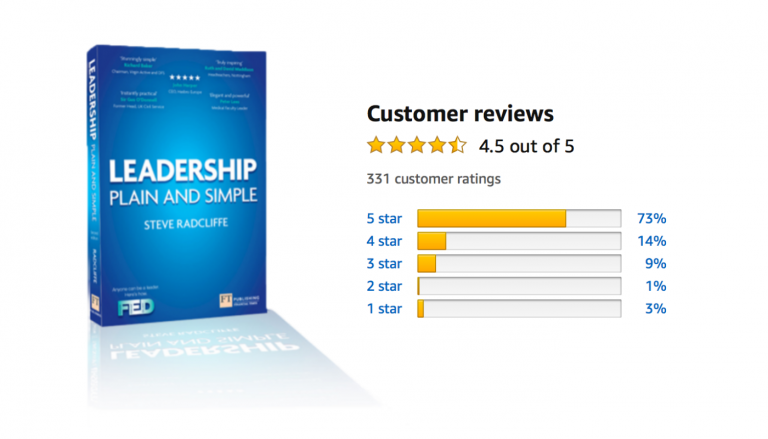
By subscribing to this website you can find out exactly how we and our clients have achieved this. Each week we will post new ideas and insights from our experience that will support you on your leadership journey. The approach we use is called Future-Engage-Deliver (FED). You can start your learning about FED leadership right now by reading a sample of my book. We are delighted that the book is the number one leadership book on Amazon UK – of the more than 165,000 available! – and it's now available on this site in audio form.

It is our goal to stimulate a national discussion about leadership, so please do join in. Comment on what you read and share this website with friends and colleagues.

We look forward to hearing from you

Best wishes, Steve....

Anthony Landale

Anthony Landale

Do you sometimes notice colleagues and friends who appear to have lost their zest for work and life? They are working hard but not getting any satisfaction from their endeavours. What’s going on?

There’s a writer called David Whyte who considers this issue in a great book called The Heart Aroused. He tells the story of how he arrived home one day and complained to a friend about feeling completely shattered. What can I do about that, he asked? His friend, wise in such matters, said simply “the antidote to exhaustion is wholeheartedness”.

This story resonates because it suggests that we get burned out when we lose sight of what really matters to us. It’s easy to compromise when the pressure is on or forget our purpose when we are constantly reacting to change. As to what we do about that, it’s easy; at least in principle. Make sure you consistently find a way, especially when busy, to step back, see the big picture and ask yourself what you care about. Better still have a good colleague who will look out for you and help you get back to your best when they see you’ve got a bit lost.

By Anthony Landale

Learn more about Anthony Landale, the author of this article.

Steve Holiday

Steve Holiday

There are two questions that I often ask in my coaching work of others: What do you really care about? and What are you leading for at home, and at work? They are of course both questions that invite Future focus and are particularly relevant at times of change and transition. I have been asking myself these questions as I near the end of two years studying and am thinking about my future. The questions have me feel both excited and somewhat scared.

From my enquiry I know that what I care about is relationships. I truly believe and wonder at all the possibilities that come from great relationships. It is where I want to bring my focus and energy, in the future and right now. I am curious about what I will learn about myself, about others, and where I will get support and challenge. I am wondering more than ever about building bigger relationships with people, learning from them and being up to something with and alongside them as they face into challenges and change.

Leadership Nudge: Are you being courageous and curious enough about what you care about most? Are you being bold and daring about what you want to lead for and create in your work? How are you supporting others to be bold, daring, courageous and curious? Who is in your support network to help make your future a reality?

By Steve Holliday, Organisational Change Leader & Leadership Coach, Siemens Energy, UK & NWE

Learn more about Steve Holliday, the author of this article.

In Leadership Plain and Simple, Steve refers to Lao Tzu who wrote

    “Consciousness or awareness is the source of your ability.”

Martin Carter has found a really creative way of staying aware each day.


When my eldest son, Nathan, turned one, I scoured the local toy shops until I had acquired 884 marbles, this being the number of weeks – and in particular weekends – until he turned 18.  I put them in a jar, marked the top of the stack on the side and put it in our kitchen.  Every Saturday I took one out, put it in my pocket and carried it with me for the week.

The idea was two-fold.  Firstly, the growing space between the original ‘high watermark’ and the top of the stack is a daily reminder of how time slips away. Secondly, and more importantly, knowing the marble I was carrying represented a small portion of a limited period of time – Nathan’s 18th – it helped me focus on what’s important.

Carrying it round, I was constantly challenged to make the most of every minute.  At home, it not only helped me be more present for Nathan but also challenged my mood – I began to see how often events that had nothing to do with him affected how I ‘turned up’ for him.  And by carrying it at work, it reminded me of my wider responsibilities – the marble regularly saved me from doing ‘just one more email’ or making ‘just one more call’ before I left the office, knowing that either could, in fact, wait.

Interestingly, though, it also made me more effective and efficient at work, because, of course, the marble didn’t just represent my time with Nathan, but it represented my time, my life.  I became more aware of how I spent that time, and worked hard at not allowing anyone or anything to rob me of it.  I didn’t want to wake up one day and find that I had literally lost my marbles.

So why is this story written in the past tense?  Well, after 4 years of marble carrying, I found that the thinking pattern it drove became hardwired in me, and so I don’t need to carry the marble anymore – which is a relief because as we now have 3 children and I’m not sure I could afford that many marbles!

p.s. Nathan turned 7 yesterday – the 30th October.  That’s 312, or 1/3rd, of the marbles gone already!

Leadership nudge: Are you losing your marbles?!  Are you constantly aware of the way you decide to use your time, and are you consciously practising squeezing the most out of every moment?

By Martin Carter, Head of Engineering Academy, E.ON UK

Learn more about Martin Carter, the author of this article.

More about Jim

by Anthony Landale on 24 October, 2011

Anthony Landale

Anthony Landale

After my post at the end of last month several people left me messages about Jim. They recognized him. And one real life Jim even wondered if it was him. It wasn’t.

What I take from this is that we meet thousands of managers and leaders who, despite their best intentions and despite following well designed processes are failing to get the best from their people. But as I was saying to a leader this week “I have yet to find anyone who is inspired by a structure or a process”.

It’s in their conversations of course where leaders can make the real difference. And by conversation I mean not only straight speaking, but also great questioning, generous listening, powerful co-inventing and, perhaps most important of all, believing that for the individual or team almost anything is possible if they really want it.

As we often say in FED, leadership is about raising the sense of hope, purpose and ambition. Start having those sort of conversations and I promise that you will find that missing spark.

By Anthony Landale

Learn more about Anthony Landale, the author of this article.

Call to Arms

by Lucy Kidd on 17 October, 2011

Lucy Kidd

Lucy Kidd

Imagine a world where schools are full of leaders who are up to something, from the Head Teacher right through to the children themselves. Where children are inspired to be the best that they can be every day with teachers who passionately engage them in learning.

Last year, Head Teacher David Maddison shared how he uses Future-Engage-Deliver to make a bigger difference in his school.

It sparked our passion to help the nation’s schools become the best that they can be. Now we want to spread the word that FED is not just for the corporate world. We believe it can play a central role in transforming education and the way schools are led.

So we’re offering a free copy of Steve’s book ‘Making a Bigger Difference’ to Head Teachers who want to bring outstanding leadership to their schools.

If you’re involved with a school (as a parent, teacher or governor) we’d love your support in making a bigger difference here.

Why not share your experience of FED and encourage your local Head Teacher to discover how it could help them in what they are up to?

If you are a Head Teacher, a teacher or involved with a school then please click this link to order your FREE copy of ‘How to Make a Bigger Difference’ and enter the Coupon Code ‘HeadTeacherOffer‘ on the next page and submit your order.

By Lucy Kidd

Learn more about Lucy Kidd, the author of this article

{ 1 comment }

Martin Carter

Martin Carter

My post a few weeks ago encouraged us to tell more stories. This time round I want to encourage you to do the opposite. Tell fewer stories. But don’t worry I haven’t had a change of heart.

I’m not talking about inspirational leadership stories that help engage others in what you are up to. I’m talking about the corrosive internal stories we tell ourselves about our limitations, shortcomings and weaknesses.

I surprised myself a few years ago when, in a meeting with two more senior colleagues whom I greatly respected and admired, I suddenly found myself admitting that I couldn’t quite believe that I kept getting away with it – by which I meant securing bigger roles which I believed needed a far more diligent, talented and capable professional than me to do them. I finished by saying “I just try and get to the end of each day without being found out”. My honesty shocked, but not as much as their reply. They both looked at me and said “What, you too? I thought that was just me!”. Superficially, the exchange was light hearted but in that moment we all recognised we were revealing a deeply held, darkly feared truth about ourselves.

I didn’t have the language of FED at the time, but I see now that the stories we were telling ourselves had us consistently playing to avoid losing – to not get ‘found out’. I’ve worked hard since at not listening to that internal story and instead concentrated on playing to win and trusting that, regardless of what the internal voice might say, that turning up at my best will be good enough…and if it’s not? Well if it didn’t work out when I turned up at my best, it definitely wouldn’t have worked out if I didn’t!

Leadership nudge: what stories are you telling yourself that have you play small, avoid certain people or tasks or shy away from certain situations? What if you tell yourself a different story – that your best is good enough – and all you need to do is bring it?

By Martin Carter, Head of Engineering Academy, E.ON UK
E : martin.carter@eon-uk.com

I received Annette’s inspiring and engaging story in response to the request ‘have you got a story to tell’ in early September. Annette wrote to me that she had sought out the FED site and had read the post by Martin Carter which had given her additional commitment and resolve during the past week. Annette recently returned from work following a number of months away being treated for Leukaemia. On her return she determined to take the opportunity to re-connect with people within her directorate from the heart and wrote a letter to everyone as part of a weekly internal work update.

She wanted her story to help others embrace uncertainty and to focus more than ever on building relationships during challenging times in order to continuously deliver. The response from her colleagues has been overwhelmingly appreciative and supportive. Here she shares her letter – only slightly edited – to her directorate with us. In addition what is so great is that not only does Annette share her story, and commitment to make every day a good day, she also asks all her colleagues to give her feedback by way of support and challenge.

Annette Davies-Govett

Annette Davies-Govett

Dear All

Firstly my very sincere thanks for such a warm welcome back to work and the kindness expressed. Also my thanks for such overwhelming support during my time away from the office, and indeed for all the excellent work that has continued during this time.

During my time away there has been much opportunity for me to reflect on many things, some of which has been very sobering and enlightening, however above all else an increased self awareness of the impact personal strength, engagement and attitude can have on how we face challenges and engage with each other.

I would like to share with you a profound example of how I became more self aware during my time away from the office.

Some of you may have seen the MacMillan posters which state ‘Today is a good day’, this resonated with me clearly during this difficult and challenging time. I quickly learnt that when my day was good I could not afford to waste any of it; grabbing every opportunity to extend the day, enjoy those around me, not sweating the small stuff (did it really matter that my husband had not unloaded the dish washer!), spent time ‘really’ listening and engaging with my daughter, talking to my family and friends and taking time to look around me at what was good, as I knew there was every chance tomorrow would be a bad day. My good days were spent squeezing as much out of the day as I could and building my strength and energy to face what was to come.

At this point you may be asking yourself what this has to do with us? Well a lot! As I drove to the hospital on one particular day in front of me was the MacMillan poster blazing the words ‘Today is a good day’, also on my mind was a major desire to talk to my consultant about when we could discuss a return to work. However as the words ‘Today is a good day’ continued to jump in front of my eyes I saw them in a different context: In undertaking my role I realised it was not good enough to have the odd good day I needed to ensure that I could make as many days as good as possible. I had become very conscious of the impact making the most of my good days had on my family and friends, and how through being at my best on such days what lay ahead, however daunting, was embraced more positively by all of us.

Reflecting on this I knew there have been times when I have not been at my best at work, not engaged as much as I could have been, taken time to understand colleagues concerns, listened more, engaged those around me and been explicit about our future aims and objectives spending most of my time focussing on ‘just getting the job done’. My steerage needed some work and it dawned on me that if I could ‘make every day a good day’ the impact on my colleagues would change for the better, just as my impact on family and friends had changed how they coped with my illness.

Having said this I also wish to highlight the commonality for all of us. I strongly believe irrespective of our level, or roles we all have a leadership role to play so that when we look to our colleagues to support delivery, bring their knowledge and expertise we are all leading through engagement, listening and treating each other as individuals, involving and supporting our colleagues to achieve our shared vision and aims. We may not always agree on everything, indeed we would become unproductive if we did, but our joint commitment to engage in this way and be more self aware of our impact on others will build relationships of unity and support.

I will also not shy away from referencing delivery; ultimately we must deliver consistently, it is what is expected of us and why we are here, however recognising we need to undertake this through increased engagement, clarity of where we are going and what is required and through collaboration and supporting each other.

Leadership reflection: Take a moment to identify how you can adapt your leadership with colleagues within your work area and across the organisation to ensure that your individual, and unique contribution, is having a collective and positive impact that we are all seeking.

Finally I commit to do everything in my power to achieve all that I have shared above . . . if you see me slipping do not be shy in coming forward to let me know.

By Annette Davies-Govett

Finding the missing spark!

by Anthony Landale on 26 September, 2011

Anthony Landale

Anthony Landale

I was speaking to a newly appointed manager, Jim, last week. He has a team of 16 people and he had begun to have those first conversations with them about objectives, performance and so on. There was little spark in these initial meetings and no sense that people were preparing differently with Jim than with any other boss. Jim was frustrated by the process and he sensed his people were bored by it too.

‘What do you think your people want?’ I asked him. ‘Other than performing to the job specification what would have them feeling excited and wanting to go that extra mile?’ Jim had no idea because he hadn’t been thinking about that conversation. He called himself a people leader but he’d fallen into that trap of going through the standard HR process and believing that was enough.

We began to explore the idea that performance appraisals are too often focussed on ticking boxes rather than being brilliant opportunities for managers and leaders to encourage possibility, hope and belief in their players. My encouragement to Jim was to have a different sort of dialogue with his direct reports – to open up conversations that that would identify those projects or opportunities that would give his people a sense of ownership for a future that both stretched and inspired them.

And more than this I suggested to Jim that if he really wanted his people to step-up then he’d need more than a one-off conversation. Rather, he’d have to make it his business from now on to check-in regularly with his team about how they were getting on with their ambitions – bringing his conviction, his energy and his backing to each and every one of them. In other words Jim would have to make it a priority to develop his people as leaders, not just as followers.

The delight in working with Jim is that these are exactly the sort of conversations he wants to have with his people. And as we spoke about why all this mattered to him his own energy returned and a new sense of possibility emerged. After all Jim is not a box-ticking sort of guy. He wants his team to feel good, to get the most they can out of work and to deliver brilliant results for the company and now he knows exactly how he has to lead to make this all begin to happen.

Leadership nudge: what opportunities are there for you to transform standard interactions into brilliant conversations that leave people feeling uplifted, energised and wanting to do more?

Learn more about Anthony Landale, the author of this article.

{ 1 comment }

Stephane Jacqmin

Stephane Jacqmin

One of my friends recently came to visit us from the Netherlands. She stayed with us for 2 days and spent time with my wife Gaelle, myself and our 3 kids at our home in Prague. On her way back to the airport, she was telling me how great, full of energy and well educated my kids were. She was full of compliments, so much that I took them personally and thanked her for them.

Reflecting on these compliments I realized that they should really have been directed to Gaelle. It is she who deserves the credit, spending her time as she does with the children every day whilst I am at work. She is herself full of positive energy, bringing a “can do” attitude to everything. As their mother, Gaelle has thought about the impact she wants to have on our kids – she wants them to be positive, to treat others with respect, to show appreciation……..

The values she wants our children to internalize are: Respect, Responsibility and Thankfulness. Gaelle strongly believes that by living these values they will grow into balanced adults and that the song they used to sing at the school assembly “Happy to be me” will be accurate and true. She doesn’t want them to find excuses. She wants them to have values that guide them towards making the right decisions and to express these values through their behaviour and actions.

Gaelle knows how she wants them to feel around her and embodies this in her behaviour every day. She regularly expresses her values. She talks with the children about what is important to her and what really matters to her and why she wants them to behave in particular ways. For example she insists on them behaving at the meal table; on respecting and being polite with people; on them doing their math exercises and reading (or learning to read as in the case of our 6 year old) every day. And as our kids are growing older (the oldest is now 11 years old) these values have become important to them and they naturally behave with respect towards and are appreciative of others, they are keen to learn and want to understand things, and they look for the positive in people and situations.

Leader’s quest: How do you live your values through your behaviours outside of work? What impact do you want to have on the people close to you at home? What would you like your family to be saying about you to people who have never met you?

By Stéphane Jacqmin

{ 1 comment }

This week the post is from Steve Holliday, a regular contributor to our FED Central site. In this post he writes of the rich mix of being wild and feeling safe at the same time. A great combination of feeling safe enough in order to take risks, to be bold, brave – and wild and the importance of harnessing all four of our energies.

Steve Holiday

Steve Holiday

I have been thinking about my role, and that of leaders, in inspiring, enabling and supporting staff to be at their best more of the time.

When I encourage clients to really be their best, there is usually a need for them to embrace a new learning edge, to take a risk, which can be both inspiring and terrifying at one and the same time. I experienced this when I embraced a personal future that I had been leading for earlier this year, that of raising my physical and spiritual game by becoming an open-water swimmer.

In my first group river-swim I was being “pretty wild” and yet I noticed I had to “be safe” too. To “be wild” I had to know the river current, water quality, water temperature and always swim with a buddy. I had to draw on four of my energies, physical, emotional and intellectual and most importantly spirit energy.

I completed my first race recently at the Great London Swim. My experience of swimming in open water with 300 others in one heat, was BOTH one of the most emotionally inspiring, and yet most mentally and physically tough and scary things I have ever done.

Here I was “being wild” and breaking new ground, and yet to enjoy the emotional experience AND be my best, I needed to be physically and mentally “safe enough”. I had my wetsuit on, space to swim freely, and pace and breathing I know was just over the edge of my fitness – all so I could be at my edge AND complete my race at my best.

My spiritual energy was at it’s most vibrant as all 400 of us in the “white wave” did the disco-like warm up together at the start. As the music pumped out on the speakers and the fitness instructors led us along in unison, I had a real sense I was truly alive in the world. The future I had spoken of and acted into 6 months ago, was now 60 seconds away from being my present. Here I was being “wild AND safe enough”.

My emotional energy was almost overwhelming at the point I entered the water with the other 400 swimmers. I didn’t know these folk, and yet I felt deeply connected as if our relationship as human beings was very powerful. We were each fully participating in pushing ourselves to our “wild edge”, and yet with 400 of us doing it AT THE SAME TIME, this collective “wildness” seemed to make it it “very safe”.

Leadership Nudges – As a leader, are you “wild enough”? Are you also “safe enough” so you fully experience it and stay with it? Are you supporting your teams in “being wild AND yet feeling safe enough”? Where is your next “wild” learning edge? Who helps you feel “safe” when you experiment?

By Steve Holliday, Leadership Coach, Siemens Energy, UK & NWE